Uterine Fibroids & Treatment Options
Uterine fibroids are very common and can cause heavy bleeding, pelvic pressure,
frequent urination, and fatigue. They are non-cancerous growths that develop in
or around the uterus, most often during a woman’s 30s and 40s.
Traditional treatment depends on symptoms. Some women choose monitoring,
while medications can help control bleeding but don’t remove fibroids. Surgical
options like myomectomy or hysterectomy are effective but typically require
longer recovery.
We specialize in a minimally invasive alternative called Uterine Artery
Embolization (UAE). This outpatient procedure works by blocking blood flow to
the fibroids, causing them to shrink while preserving the uterus. It offers strong
symptom relief with a much faster recovery and no major surgery.
UAE is ideal for women whose symptoms are impacting daily life and who want to
avoid more invasive procedures.
Ready to take the next step?
Explore the tabs below to learn more about your options. If you’re ready to take
control of your health, schedule your appointment online or call our center - we’re
here to help you get back to your life.
Understanding Uterine Fibroids
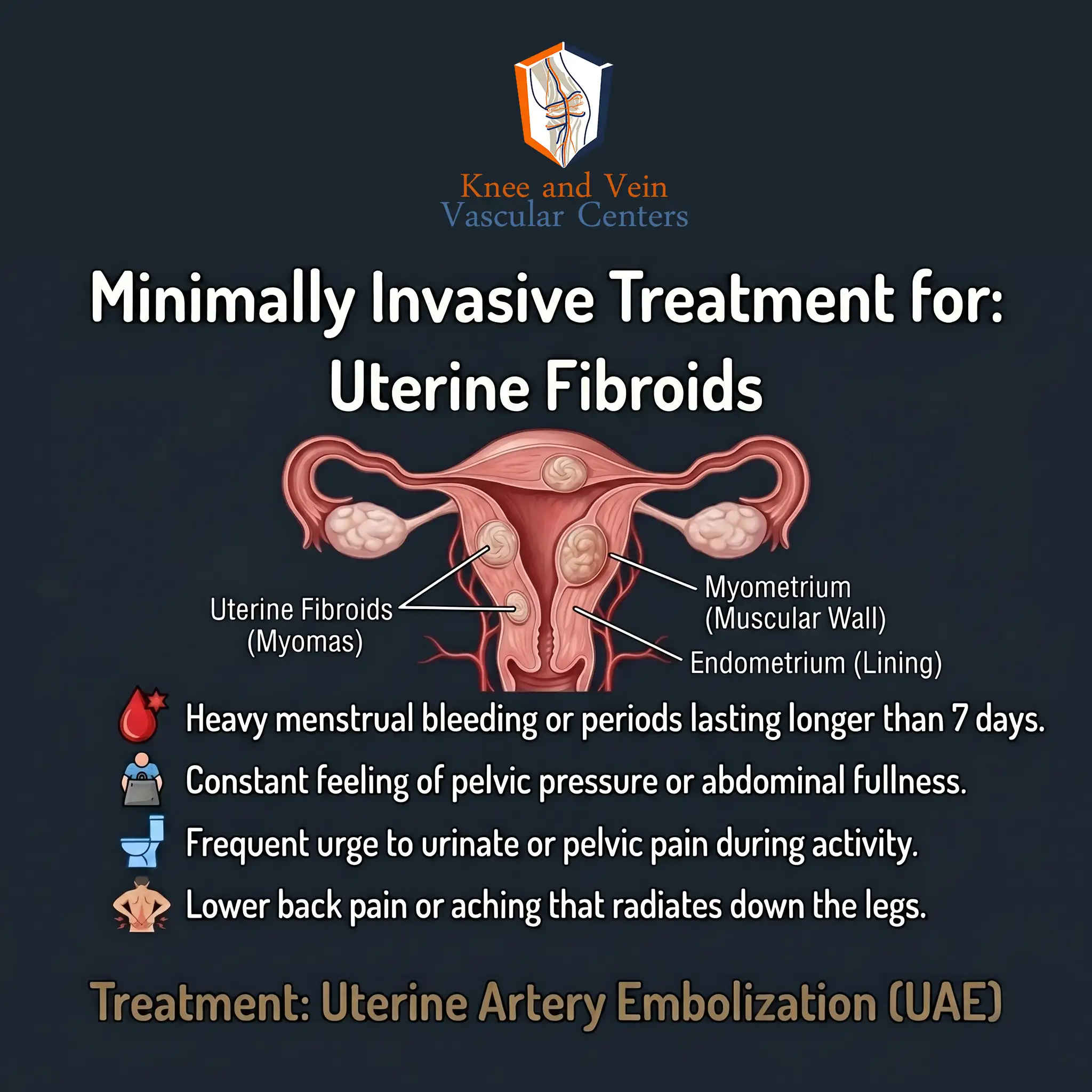
Uterine fibroids (also called leiomyomas) are non-cancerous growths that develop in or on the uterus. They are extremely common and affect more than 60% of women by age 45.
Many women with fibroids do not experience symptoms and may only discover them during a routine pelvic exam or imaging study. However, about 25–30% of women develop symptoms that can affect their daily life and quality of life.
Common Symptoms
Women with symptomatic fibroids may experience:
- Heavy menstrual bleeding, sometimes with clots
- Periods lasting longer than 7 days
- Anemia, which may cause fatigue or weakness
- Pelvic pressure or fullness
- Frequent urination or difficulty emptying the bladder
- Constipation or bloating
- Pain during intercourse
- Lower back pain
- Abdominal enlargement when fibroids are large
Risk Factors
Several factors may increase the risk of developing fibroids:
- Age (most common in women in their 30s and 40s)
- Family history of fibroids
- Being overweight or obese
- Early onset of menstruation
- Race (fibroids are more common and often develop earlier in African-American)
Fibroids are hormone-sensitive and often grow during the reproductive years when estrogen levels are higher. They typically shrink after menopause.
Treatment Options for Fibroids
Not all fibroids require treatment. If fibroids are not causing symptoms, your doctor may recommend monitoring them over time.
Treatment may be recommended when symptoms such as heavy bleeding, pain, or pressure affect your quality of life.
Lifestyle & Supportive Treatments
Some measures may help manage symptoms:
- Iron supplements for anemia caused by heavy bleeding
- Weight management
- Monitoring fibroid growth with periodic imaging
Medications
Medications can help control symptoms but do not eliminate fibroids.
Options may include:
- Hormonal birth control (pills, patches, or hormonal IUD) to reduce heavy bleeding
- NSAIDs such as ibuprofen to reduce menstrual pain
- Tranexamic acid, a non-hormonal medication used during menstruation to reduce bleeding
- Hormone-modulating medications (GnRH agonists or antagonists) that temporarily shrink fibroids
Minimally Invasive Uterine Artery Embolization (UAE)
Many women today are choosing a minimally invasive procedure called Uterine Artery
Embolization (UAE).
This treatment can reduce fibroid size and symptoms without removing the uterus or
requiring major surgery.
Surgical Options
For women with severe symptoms, surgery may be recommended:
Myomectomy
- Surgical removal of fibroids while preserving the uterus
- Often recommended for women who wish to maintain fertility
Hysterectomy
- Surgical removal of the uterus
- Provides a permanent cure for fibroids but eliminates the ability to become pregnant
Minimally Invasive Fibroid Treatment
At our center, we specialize in Uterine Artery Embolization (UAE), also called Uterine Fibroid Embolization (UFE). This is a minimally invasive treatment performed at our center.
The procedure blocks the blood supply to fibroids, causing them to shrink over time and relieving symptoms.
How UAE Works
Fibroids require a blood supply to grow.
During UAE:
- Tiny particles are injected into the uterine arteries
- These particles block blood flow to the fibroids
- The fibroids gradually shrink and lose their activity
- Normal uterine tissue remains healthy due to alternative blood supply
What Happens During the Procedure
UAE is performed using advanced imaging guidance.
During the procedure:
- A small catheter is inserted through a tiny puncture in the wrist or groin
- The catheter is guided through the blood vessels to the uterine arteries
- Small embolic particles are injected to block blood flow to the fibroids
The procedure typically takes an hour.
Patients are monitored in a comfortable recovery area for 1-2 hours, and go home the same day.
Recovery After UAE
Most women experience:
- Pelvic cramping for several days
- Mild fatigue or nausea temporarily
- Gradual improvement in symptoms over the following months
Most patients:
- Return to normal activities within 1–2 weeks
- Avoid strenuous activity for 2–4 weeks
Results and Effectiveness
Studies show strong outcomes for UAE:
- 67–89% of women experience major improvement in heavy bleeding
- Fibroids shrink 39–60% over time
- 78–90% of women report significant symptom improvement
- Quality of life improves significantly within the first 3–6 months
Durability of Results
Symptom improvement can last for many years:
- Most women maintain improvement for up to 5 years or longer
- Some patients may require additional treatment later
At 5–10 years:
- About 14–31% of women may require another treatment
Repeat UAE or other treatments remain possible if symptoms return.
Benefits of UAE
- Minimally invasive procedure
- Preserves the uterus
- No large surgical incision
- Go home same day.
- Faster recovery compared with surgery
- Treats multiple fibroids at once
Am I a Candidate? | Schedule a Consultation
You may be a candidate for Uterine Artery Embolization if you:
- Have heavy menstrual bleeding caused by fibroids
- Experience pelvic pressure or pain
- Want to avoid hysterectomy
- Prefer a minimally invasive treatment
- Want to preserve your uterus
- Have tried medications without adequate relief
UAE may be particularly helpful for women with multiple fibroids, since the procedure treats all fibroids at the same time.
Fertility Considerations
Pregnancy after UAE is possible, but women planning pregnancy should discuss options carefully with their physician.
Schedule a Consultation
During your consultation, we will:
- Review your symptoms and medical history
- Evaluate imaging such as ultrasound or MRI
- Discuss treatment options tailored to your needs
Our goal is to provide safe, minimally invasive treatments that relieve symptoms while helping you avoid major surgery whenever possible.
Contact our center to schedule a consultation and learn whether Uterine Artery Embolization may be right for you.