Peripheral Artery Disease (PAD)
Leg pain, cramping, or slow-healing wounds can be signs of Peripheral
Artery Disease (PAD)—a condition caused by plaque buildup that narrows
the arteries and reduces blood flow to the legs and feet. Common
symptoms include pain with walking, coldness, numbness, and
non-healing sores. PAD is also an important warning sign, as it increases
the risk of heart attack and stroke.
Traditional treatment focuses on slowing the disease and protecting your
overall health. This includes quitting smoking, structured walking
programs to improve circulation, and medications such as statins, blood
pressure control, and antiplatelet therapy.
We specialize in advanced, minimally invasive PAD treatments that go
beyond symptom management. In our center lab, we use
image-guided techniques to open blocked arteries through a tiny
incision—no major surgery required. Our treatments include angioplasty
and stents to restore blood flow, atherectomy to remove plaque, and
shockwave therapy to break up calcium buildup. These are outpatient
procedures, allowing you to go home the same day.
These treatments are ideal for patients with leg pain that limits walking or
wounds that are not healing despite medical therapy. Our goal is to restore
circulation, prevent serious complications, and help you return to walking
comfortably.
Ready to take the next step?
Explore the tabs below to learn more about your options. If you’re ready to
improve your circulation and find relief, schedule your appointment online
or call our center - we’re here to help you get back to your life
Understanding Peripheral Artery Disease (PAD)
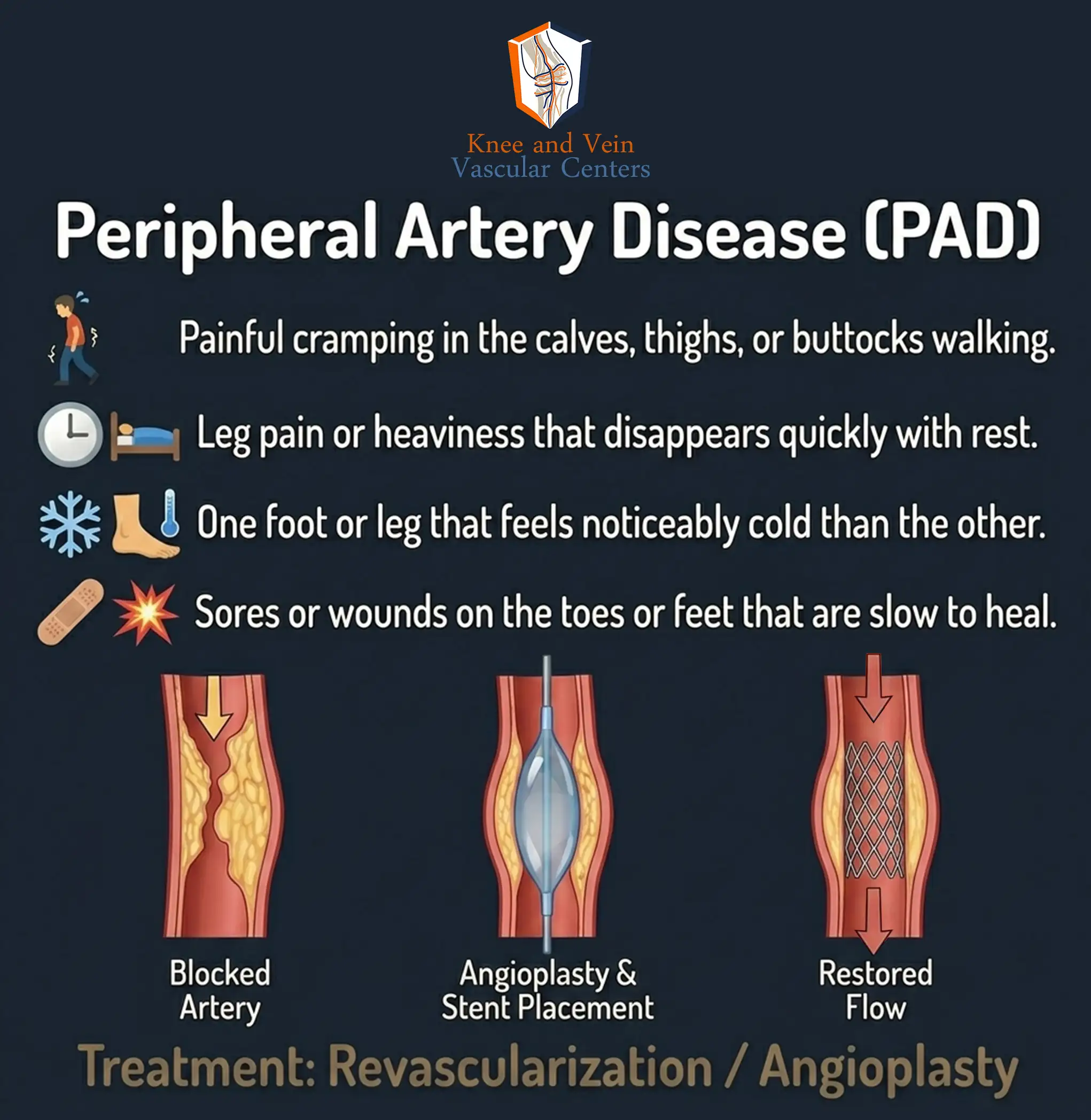
Peripheral Artery Disease (PAD) occurs when the arteries that supply blood to the legs become narrowed or blocked by plaque buildup. This condition, called atherosclerosis, reduces blood flow to the muscles and tissues of the legs and feet.
PAD affects millions of people in the United States and becomes more common with age.
Common Symptoms
Some people with PAD may have no symptoms, while others experience:
- Leg pain or cramping while walking (claudication) that improves with rest
- Numbness, weakness, or heaviness in the legs
- Coldness in the lower leg or foot
- Slow-healing sores or wounds on the feet or toes
- Changes in skin color of the legs or feet
- Shiny skin or hair loss on the legs
Because symptoms can be subtle, many people may not realize they have PAD.
Why PAD is Important
PAD is not only a circulation problem in the legs—it is also a sign of atherosclerosis elsewhere in the body.
People with PAD have a higher risk of:
- Heart attack
- Stroke
- Serious circulation problems in the legs
Early diagnosis and treatment can help prevent complications and improve quality of life.
Risk Factors
Factors that increase the risk of PAD include:
- Smoking
- Diabetes
- High blood pressure
- High cholesterol
- Age over 65
- Family history of vascular disease
Treatment Options for PAD
Treatment for PAD focuses on improving circulation, relieving symptoms, and reducing the risk of heart attack or stroke.
Lifestyle Changes
Lifestyle changes are a key part of treatment:
- Smoking cessation (the most important step)
- Walking or supervised exercise programs
- Healthy diet and weight management
Regular walking exercise can significantly improve walking distance and overall mobility.
Medications
Your doctor may prescribe medications to improve circulation and reduce cardiovascular risk:
- Cholesterol-lowering medications (statins)
- Blood pressure medications
- Antiplatelet medications such as aspirin or clopidogrel to prevent blood clots
- Diabetes medications if needed
- Cilostazol, a medication that may help improve walking distance
When Additional Treatment Is Needed
If symptoms continue despite lifestyle changes and medications, procedures may be recommended to restore blood flow to the legs.
These treatments can help improve:
- Walking ability
- Leg pain and cramping
- Healing of foot wounds
- Overall quality of life
Minimally invasive procedures can often restore blood flow without major surgery.
Learn more about these treatments in the next tab.
Minimally Invasive PAD Treatments
At our center, we specialize in minimally invasive PAD treatments performed at our center.
These procedures restore blood flow using small catheters and advanced imaging guidance, allowing all patients to return home the same day.
Common PAD Procedures We Perform
Balloon Angioplasty
- A small balloon is inserted into the narrowed artery and inflated to open the blockage and improve blood flow.
Drug-Coated Balloon Angioplasty
- A balloon coated with medication helps open the artery while reducing the chance that the blockage will return.
Stent Placement
- A small metal mesh tube (stent) may be placed in the artery to keep it open and maintain blood flow.
Atherectomy
- Specialized devices remove or shave away plaque buildup from inside the artery.
Intravascular Lithotripsy
- Shockwave technology can break up hard calcium deposits within the artery to allow it to open more effectively.
What to Expect During the Procedure
All procedures are performed as outpatient treatments at our center.
During the procedure:
- A small catheter is inserted through a tiny puncture in the groin or wrist
- Using real-time imaging, the physician guides the catheter to the blocked artery
- The appropriate treatment (balloon, stent, or plaque removal) is performed
The procedure typically takes 1–3 hours, and most patients return home the same day.
What Happens After the Procedure
After an endovascular procedure, ongoing care is important to maintain good circulation.
Patients typically require:
- Antiplatelet medications such as clopidogrel plus aspirin for at least 30 days (sometimes longer depending on the procedure)
- Continued statin therapy and other cardiovascular medications
- Regular follow-up appointments to monitor circulation
- Continued exercise and lifestyle changes
- Imaging tests such as ultrasound to ensure the treated artery remains open
Important Points to Remember
- PAD is a serious vascular condition that increases the risk of heart attack and stroke
- All patients with PAD require medical therapy to reduce cardiovascular risk, even if a procedure is performed
- Exercise therapy is highly effective and should be part of treatment
- Procedures work best when combined with medications and lifestyle changes
- Smoking cessation is critical for the best outcomes
- Some arteries may narrow again over time, and repeat treatments may occasionally be needed
- Treatment decisions are individualized based on your symptoms, health, and the location of blockages
Am I a Candidate? | Schedule a Consultation
You may be a candidate for minimally invasive PAD treatment if you:
- Have leg pain or cramping when walking
- Have non-healing wounds on your feet or toes
- Experience pain in your feet or legs even at rest
- Have been diagnosed with blockages in the leg arteries
- Have tried lifestyle changes and medications but still have symptoms
PAD treatments are most effective when combined with:
- Continued exercise
- Medications to reduce cardiovascular risk
- Smoking cessation
Schedule a Consultation
During your consultation, we will:
- Review your symptoms and medical history
- Evaluate your circulation and imaging studies
- Determine whether minimally invasive treatment may improve blood flow
Our goal is to provide safe, minimally invasive treatments that restore circulation, relieve symptoms, and help prevent complications from PAD.
Contact our center to schedule a consultation and learn more about PAD treatment options available at our center.